Every week, Queensland homeowners are getting solar quotes that focus on panel brands, inverter efficiency, and payback periods — and barely mentioning the switchboard. But here is the reality: the switchboard, not the panels, is the starting point for any solar installation. If your board is not up to the job, no amount of quality panels or a top-tier inverter will fix it.

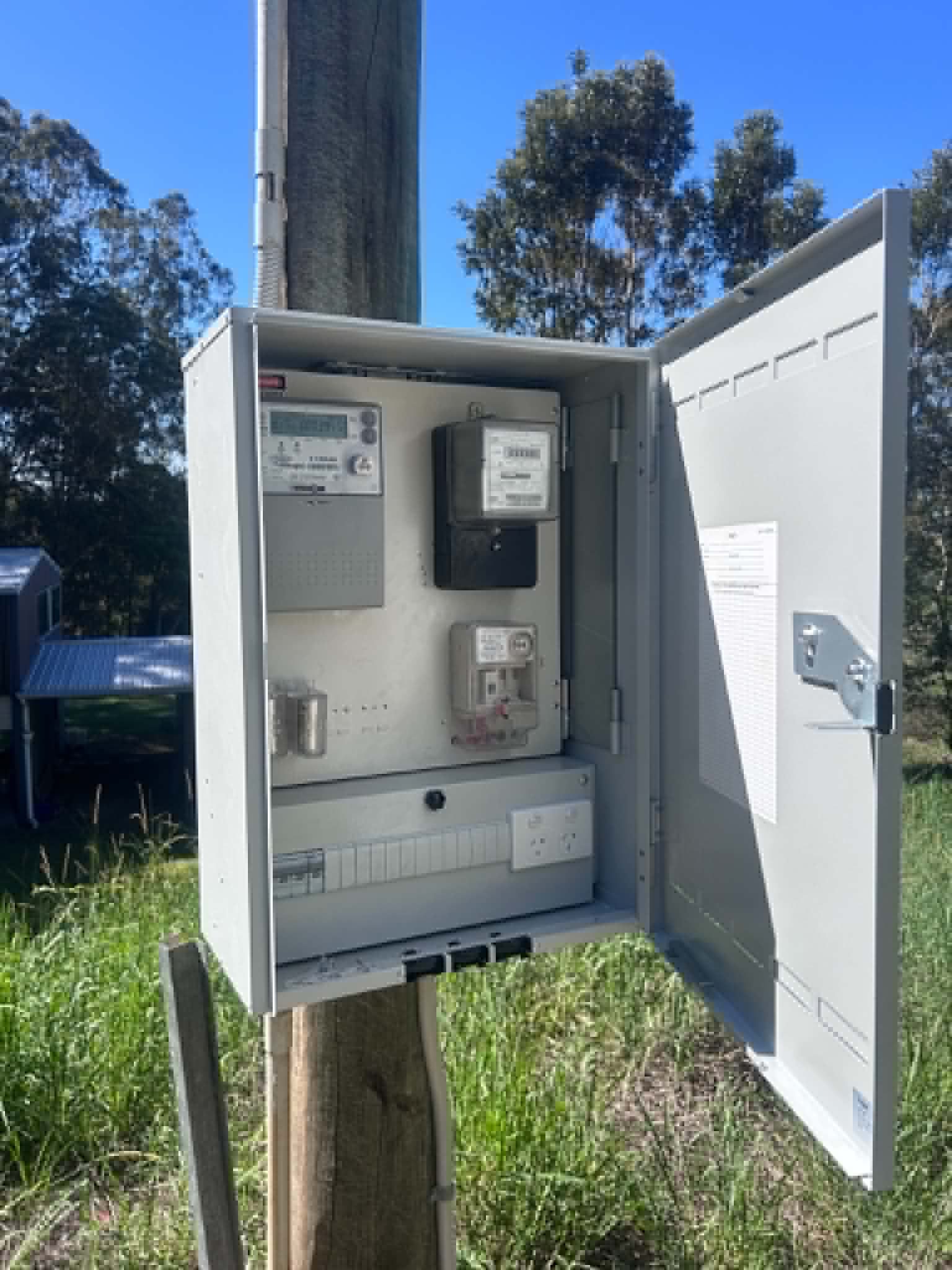
This is especially relevant on the Sunshine Coast and across South East Queensland, where a significant proportion of homes were built in the 1970s through to the early 2000s — and many still have the original switchboard from that era. Getting this right before you commit to solar will save you money, delays, and headaches.
Why the Switchboard Comes First
Solar power does not just feed your appliances. It feeds back into the grid, it requires dedicated protection devices, and it places ongoing load on components that were never designed with solar in mind. Your switchboard is the hub through which all of this happens. Every amp of solar generation and every amp of export flows through the main switch, the busbars, the neutral bar, and the circuit breakers in that enclosure.
When a switchboard is not solar-ready, the consequences range from the solar installer simply refusing to connect, to a technically compliant installation that carries real safety and compliance risks. Some solar installers will do the minimum to get the job connected — but that minimum is not always what is best for your home.
What "Solar-Ready" Actually Means
The phrase gets used loosely, but a genuinely solar-ready switchboard has several specific characteristics:
Main Switch Capacity
For most residential solar installations in Queensland, your main switch needs to be rated at a minimum of 63 amps. Many older boards have a 40A or even 32A main switch — fine for the original house load, but not adequate once a solar inverter is connected and feeding back through the same point. Undersized main switches are both a compliance issue and a genuine fire risk under fault conditions.
Solar Isolator Positioning
Queensland regulations require a solar isolator — a dedicated switch that allows the solar inverter to be isolated from the switchboard — to be positioned and accessible in accordance with AS/NZS 3000 and the relevant Queensland Electrical Safety Office requirements. This isolator must be clearly labelled and positioned so that emergency responders and service personnel can safely de-energise the solar system. The position matters: an isolator shoved into an awkward location to fit around an old board layout will often fail inspection.
Spare Circuit Space
A solar installation requires at minimum a dedicated solar circuit breaker. A battery storage system requires an additional breaker. If your current switchboard has every circuit position occupied — which is common in older boards that have had circuits added over the years — there is simply nowhere to fit these safely. You need genuine spare positions, not a workaround with a tandem breaker crammed into a single slot.
Neutral Bar Capacity
The neutral bar in your switchboard must have the physical connection points and current capacity to handle the additional neutral connections that solar and battery circuits require. Older boards often have neutral bars that are already fully loaded and do not have the copper rating for additional solar current.
Why Ceramic Fuse Boards Cannot Accept Solar — Full Stop
Ceramic fuse boards pre-date residual current devices (RCDs), solar systems, and modern earthing requirements by decades. They have no provision for the earth leakage protection that Queensland now requires on all circuits. They cannot accommodate a solar circuit breaker of the correct type. Their main switches are typically 32A or less. And critically, any licensed solar installer operating in Queensland is required to connect only to a compliant modern switchboard — attempting to connect solar to a ceramic board would result in the installation failing its inspection, and exposing both the installer and the homeowner to liability.
If you have a ceramic fuse board, the path to solar begins with a full switchboard replacement. There is no patch, no adapter, and no shortcut.
What a Solar-Ready Switchboard Upgrade Involves
A proper switchboard upgrade for solar is not a quick job, and it should not be treated as one. Here is what it actually involves:
- Replacing the entire board with a modern consumer mains unit — the appropriate size for your home's circuit count, with spare positions for solar and battery circuits
- Installing RCD protection on all circuits — this is now required under Queensland regulations for any board replacement, and protects your household against earth fault and electrocution risk
- Installing a correctly rated main switch — typically 63A for most homes going solar
- Adding the solar circuit breaker in a dedicated position, correctly rated for the inverter output
- Correct labelling — every circuit clearly identified, solar isolator clearly marked, compliant with AS/NZS 3000
- Issuing a Certificate of Test — your licensed electrical contractor must provide this on completion
The upgrade also creates the opportunity to address any other issues found in the existing board — aged or undersized wiring, non-compliant earthing, or circuits that have never had RCD protection. A board replacement done properly leaves your home's electrical system in genuinely good shape for the next two decades.
Battery Storage Adds Further Requirements
If you are planning to add battery storage now or in the future, the requirements go beyond what a basic solar-ready board needs:
- Dedicated battery circuit breaker — sized and rated for your specific battery system
- Gateway/inverter connection — some battery systems (such as the Tesla Powerwall and SolarEdge StorEdge) require specific switchboard wiring arrangements for their gateway or energy meter
- Separate battery isolator — required to allow the battery system to be safely isolated from the board independently of the solar system
- Additional spare circuit capacity — if you want to add a backup-capable sub-panel for critical loads, this requires further thought at the board design stage
The smart move, if you are planning to add batteries within the next few years, is to have the switchboard upgrade account for this upfront. Retrofitting battery requirements into a board that was only designed for solar means a return visit and additional cost.
Solar Company Upgrade vs. Proper Electrical Contractor Upgrade
This is where many Queensland homeowners get caught out. Some solar companies offer switchboard upgrades as part of the solar package — but these upgrades are often done to the minimum standard required to get the solar connected, not to the standard that's best for the home.
A minimum-work solar switchboard upgrade might mean: replacing only the main switch, adding only the solar breaker, and leaving the rest of the board as-is. The solar gets connected, but the home still has circuits without RCD protection, a board that may be undersized for future needs, and potentially wiring that is not brought to current code.
A switchboard upgrade carried out by a proper electrical contractor — one that specialises in switchboard work rather than solar installation — approaches it differently. The whole board is replaced, all circuits get RCD protection, the earthing is checked and rectified, spare capacity is built in, and the finished result is a genuinely compliant modern installation. The cost difference between the two approaches may be $400–$800, but the outcome is substantially better.
How to Tell If Your Board Is Solar-Ready: Quick Indicators
Queensland-Specific: Energex Metering Requirements for Solar
Queensland homeowners connecting solar to the Energex network (which covers South East Queensland including the Sunshine Coast) need to be aware of specific metering requirements. For grid-connected solar systems, Energex requires the installation of a bi-directional smart meter — one that can measure both the power you consume from the grid and the power you export to it. This meter is required before any solar feed-in tariff can be paid.
The metering upgrade is typically arranged through your electricity retailer and coordinated with Energex as the distribution network service provider. Your solar installer should handle this application process, but it is worth confirming upfront that they are managing it correctly. Some installations have sat waiting weeks for metering approval because the application was incomplete or the retailer had not been notified.
Your switchboard must also be physically accessible and compliant for the Energex meter technician to carry out the meter replacement — another reason a proper switchboard upgrade, done before solar is commissioned, simplifies the whole process.
Cost Factors for a Switchboard Upgrade
Switchboard upgrade costs in Queensland vary based on several factors:
- Size of the home and number of circuits: A small unit may have 8–10 circuits; a large home might have 20 or more. More circuits means a larger board, more breakers, and more labour.
- Current wiring condition: If the existing wiring is in poor condition, undersized, or requires extension to reach the new board position, costs increase accordingly.
- Whether it is a full replacement or modification: Replacing a board that is already modern but just needs a solar breaker added is cheaper than replacing a ceramic fuse board from scratch.
- Earthing system: If the earthing needs to be rectified or upgraded (common in older homes), this adds to the scope.
- Location and access: Difficult-to-access meter boxes or boards in unusual locations can add time.
As a general guide, a full switchboard replacement for solar-readiness on a typical 3–4 bedroom Sunshine Coast home runs between $1,800 and $3,200 depending on the factors above. This cost is separate from the solar installation itself, and separate from any metering upgrades Energex carries out.
The most important thing to understand is that this cost is not wasted. A modern, properly upgraded switchboard improves the safety, compliance, and value of your home — regardless of solar. Think of it as the electrical foundation that makes solar possible, not a tax on going solar.